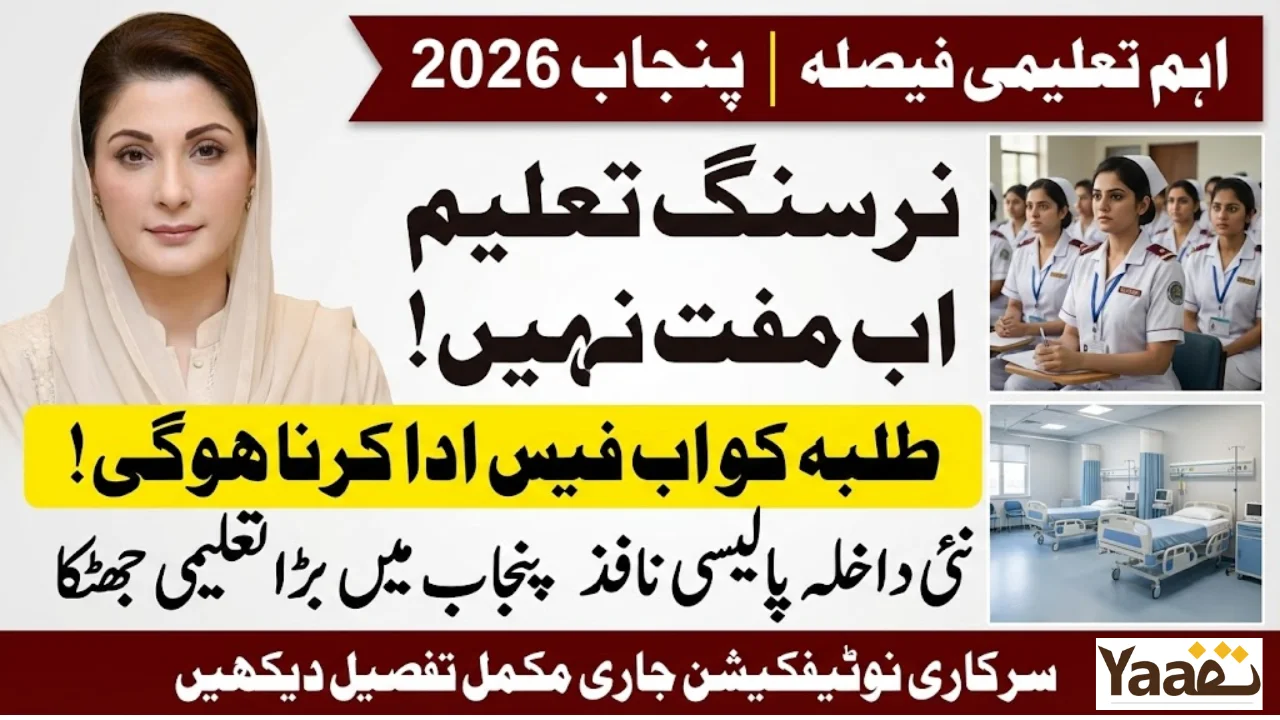
The Punjab government has introduced a major policy shift in nursing education, ending the long-standing model of free nursing studies in government colleges. Under the updated framework, students enrolling in public-sector nursing institutions will now be required to pay tuition fees, hostel charges, and other institutional costs, marking a significant change for thousands of aspiring nurses across the province.
This decision reshapes how nursing education is financed and has sparked widespread discussion among students, parents, and healthcare professionals.
What Has Changed in Nursing Education in Punjab?
Previously, nursing students in government colleges benefited from:
-
Zero tuition fees
-
Monthly stipends
-
Free or highly subsidized hostel accommodation
Under the new policy:
-
Free education has been discontinued
-
Monthly stipends have been withdrawn
-
Hostel facilities will now be paid services
This applies to new admissions from 2026 onward, while existing students may be guided separately by their institutions.
How Much Money Will Students Now Have to Pay?
Although exact fee structures vary by institution, students should expect:
-
Tuition fees: Several thousand rupees per semester
-
Hostel charges: Monthly accommodation fees
-
Miscellaneous costs: Uniforms, clinical tools, and exam charges
Previously, students effectively saved tens of thousands of rupees per year through free education and stipends. That financial relief will no longer be available to new entrants.
Who Is Eligible for Admission Under the New Rules?
The updated admission policy introduces clearer eligibility criteria:

Academic Requirement
-
Minimum 50% marks in FSc (Pre-Medical)
Domicile Requirement
-
Punjab domicile is mandatory for admission to government nursing colleges
Gender-Specific Admission
-
Certain institutions, such as the Nursing College at Shahdara Teaching Hospital, will admit male students only
These rules aim to standardize admissions but also limit access for some applicants.
Seat Allocation in Government Nursing Colleges
Despite the policy change, seat numbers remain substantial:
-
3,100 seats in morning shifts
-
3,000 seats in evening shifts
-
Teaching hospital–affiliated colleges: 100 seats each per shift
-
District hospital–affiliated colleges: 50 seats each per shift
This ensures capacity remains strong, even as the funding model changes.
Who Benefits From This Policy Change?
While students face higher costs, the government argues that:
-
Collected fees will help improve facilities and training quality
-
Institutions may upgrade labs, hostels, and clinical equipment
-
Financial sustainability of nursing colleges may improve
However, students from low-income families lose direct financial benefits, especially the stipend that previously helped cover daily expenses.
Who Is Most Affected Financially?
The biggest impact will be on:
-
Students from low-income households
-
Rural applicants relying on hostels
-
Families planning education based on free public-sector options
Without stipends, students may now need family support, loans, or part-time income to continue studies.
Why This Decision Matters for Healthcare
Nursing staff are the backbone of hospitals. Any barrier to nursing education can:
-
Reduce enrollment in future years
-
Affect workforce availability
-
Impact patient care quality

Balancing education costs with accessibility will be crucial going forward.
FAQs
1. Is nursing education completely free in Punjab now?
No. Free nursing education has been withdrawn in government colleges for new admissions.
2. Will nursing students still receive a stipend?
No. The monthly stipend has been discontinued under the new policy.
3. How much money will students now need?
Students should expect to pay tuition, hostel, and related charges, amounting to thousands of rupees annually.
4. Is Punjab domicile compulsory for admission?
Yes, a Punjab domicile is now mandatory for government nursing colleges.
5. Are seat numbers reduced after this policy?
No. Seat numbers remain largely unchanged, with thousands of seats available across shifts.
Final Takeaway
The end of free nursing education in Punjab marks a turning point in public-sector healthcare training. While the policy may strengthen institutional funding and infrastructure, it also places a new financial burden on students, particularly those from disadvantaged backgrounds.
For aspiring nurses, early planning, clear budgeting, and understanding admission rules are now more important than ever when pursuing a nursing career in Punjab.
Latest Updates