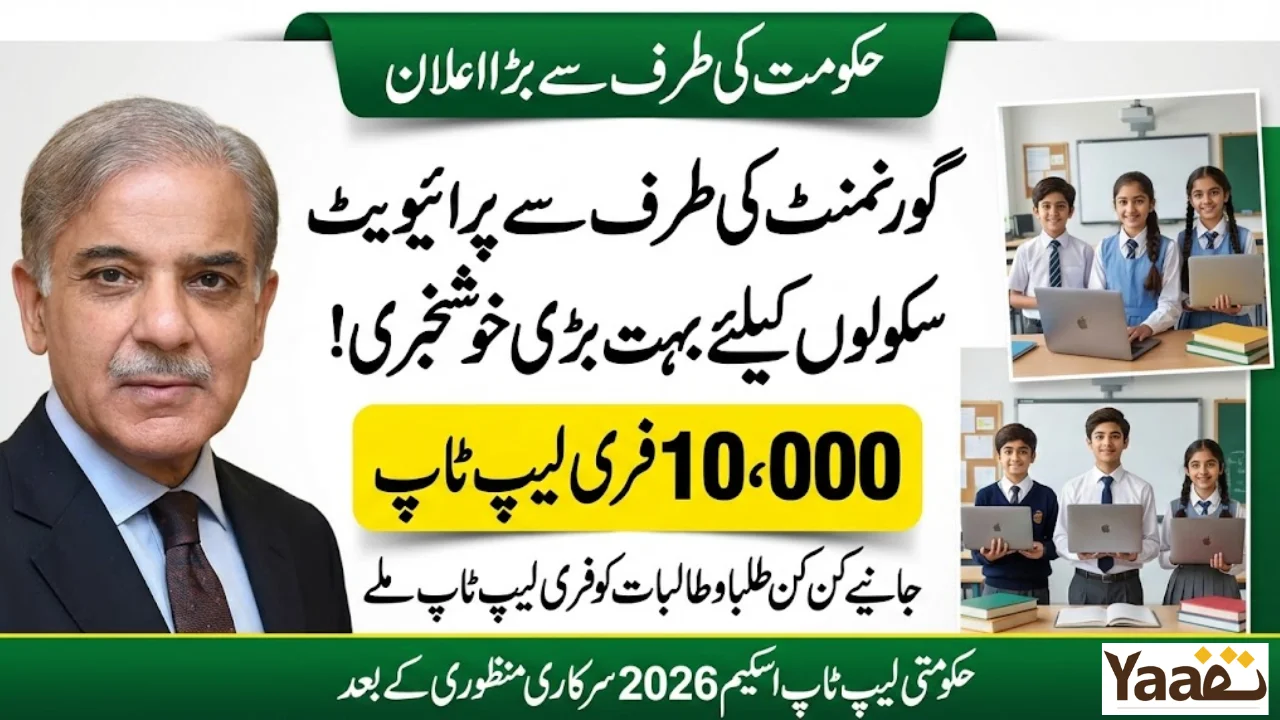
A meaningful shift is taking place in Pakistan’s education support policies. For the first time, private school students have officially been included in a government-funded laptop distribution program, expanding access to digital learning beyond the public sector.
The decision signals a broader understanding that education needs digital tools regardless of school type, especially as online learning, research, and skill development become essential for students across the country.
Why This Update Matters Right Now
Until now, most government laptop schemes focused only on public institutions. This expansion recognizes that:
-
Millions of students study in low-fee private schools
-
Digital access gaps exist even outside government schools
-
Technology access directly affects learning outcomes
By approving 10,000 free laptops, the government is taking a step toward more inclusive digital education.
What Has Been Officially Announced
The provincial government has confirmed that:
-
10,000 laptops will be distributed free of cost
-
Private school students are now eligible

-
Distribution will be completed within the current year
-
Funding is supported by an increased education development budget
The announcement was shared by Rana Sikandar, reinforcing that the decision has full administrative approval.
Who Can Benefit From This Laptop Scheme
The scheme is designed for students who:
-
Are enrolled in recognized private schools
-
Meet academic or merit-based criteria (to be notified)
-
Do not already own suitable digital devices
-
Require laptops for learning, research, or skill development
Priority is expected to be given to middle- and lower-income families studying in private institutions.

How Much Money Do Eligible Students Actually Get
Students will not receive cash. Instead, they receive a brand-new laptop, which represents a direct financial benefit.
Estimated Value Per Student
-
Market value per laptop: Rs. 100,000 – Rs. 150,000
-
Total program value: Over Rs. 1 billion
For families, this means:
-
Zero purchase cost
-
No installments
-
No repayment
-
Long-term educational asset
This is equivalent to saving an entire year’s school or tuition-related technology expense.

Key Benefits for Students and Families
-
Access to online classes and learning portals
-
Ability to complete assignments and research
-
Development of digital and IT skills
-
Support for exam preparation and self-learning
-
Reduced financial pressure on parents
For many households, this laptop becomes a shared family learning tool, multiplying its impact.
How This Fits Into Wider Education Reforms
Alongside the laptop expansion, the government has also:
-
Increased the education budget significantly
-
Upgraded hundreds of schools
-
Launched teacher recognition initiatives
-
Planned Centres of Excellence and Schools of Eminence
These steps show a long-term strategy, not a one-off announcement.
What Students Should Do Next
At this stage:
-
No immediate application window has been announced
-
Students should stay connected with their school administration
-
Official guidelines and eligibility criteria are expected soon
Avoid unofficial forms or agents. All legitimate updates will come through official government channels.
Important Advisory
-
Laptops are free – no fees, no registration charges

-
No one is authorized to “guarantee” selection
-
Any demand for money is fraud
FAQs
1. Are private school students really eligible now?
Yes. The scheme has officially been expanded to include private school students.
2. How many laptops will be distributed?
A total of 10,000 laptops have been approved in this phase.
3. Will students receive cash instead of laptops?
No. The benefit is provided only in the form of laptops.
4. How much is one laptop worth?
Each laptop is estimated to be worth Rs. 100,000 or more, depending on specifications.
5. When will the laptops be distributed?
Distribution is planned within the current year, with dates to be announced officially.
A Calm Final Word
The inclusion of private school students in the government laptop scheme 2026 marks an important step toward fairer digital access in education. By investing in devices instead of cash handouts, the government is supporting learning, skills, and future employability.
For thousands of students, this laptop will not just be a device—it will be a gateway to opportunity.