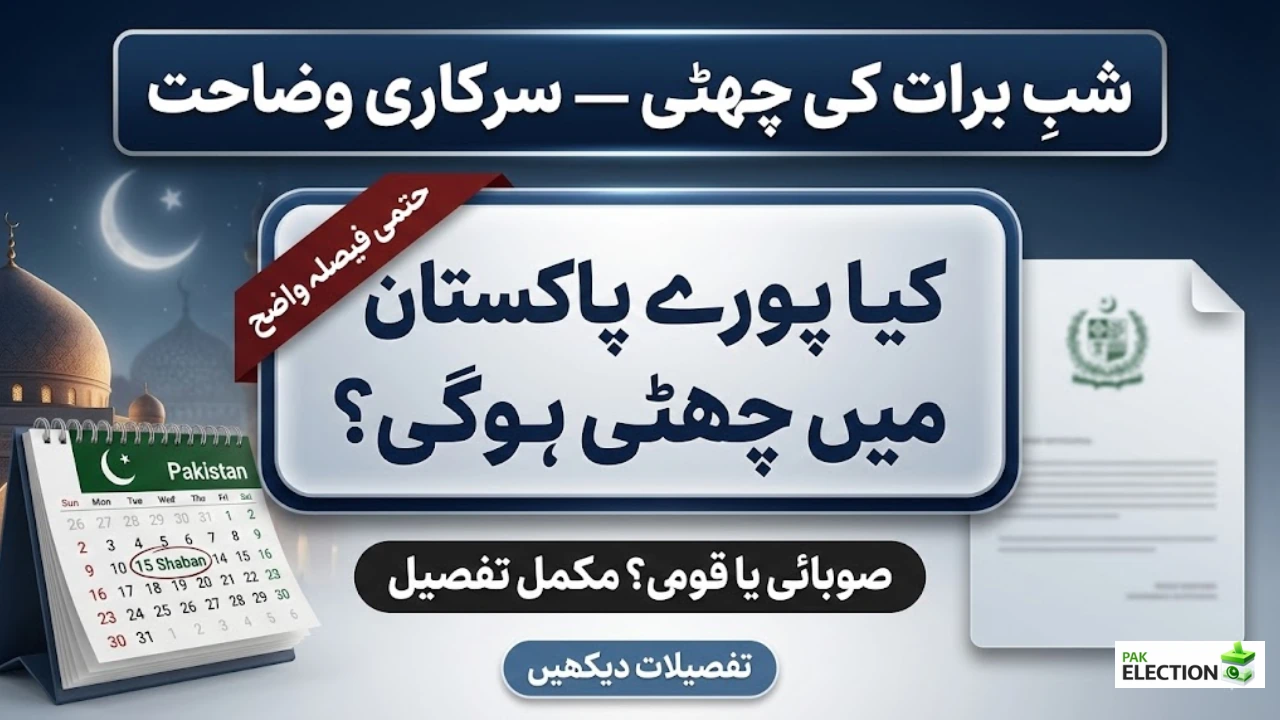
Every year before Shab-e-Barat, confusion spreads across Pakistan about whether there will be a nationwide holiday or not. People plan travel, schools wait for notifications, and offices look for official orders.
This clarification matters today because incorrect information can affect work, education, and religious arrangements.
What Is the Update
Shab-e-Barat is not a nationwide public holiday in Pakistan.
There is no federal government notification declaring a countrywide holiday for Shab-e-Barat.
Instead, decisions related to holidays or closures are usually made by provincial governments, education departments, or individual institutions. These decisions may vary from province to province and from year to year.
In recent years, the federal government has not included Shab-e-Barat in the official list of national public holidays.
Who Is Affected
The impact of this clarification depends on where you live and what sector you belong to.
Government offices:
Federal government offices normally remain open unless a special notification is issued. Provincial offices may follow their own decisions.
Schools, colleges, and universities:
Many educational institutions, especially in Punjab and Sindh, often announce closures on Shab-e-Barat. These are provincial or departmental decisions, not national ones.
Private sector employees:
Private companies decide independently. Some allow a day off, while others continue normal working hours.
Banks and essential services:
Banks usually follow the State Bank of Pakistan’s holiday schedule. Shab-e-Barat is generally not a bank holiday unless clearly notified.
Important Dates, Amounts, or Key Facts
Shab-e-Barat is observed on the 15th night of the Islamic month of Shaban. The exact Gregorian date changes every year based on moon sighting.
Below is a simple factual overview to remove confusion:
| Item | Status |
|---|---|
| Nationwide public holiday | No |
| Federal govt offices | Usually open |
| Provincial school closures | Possible (varies by province) |
| Banks | Usually open |
| Private offices | Employer’s decision |
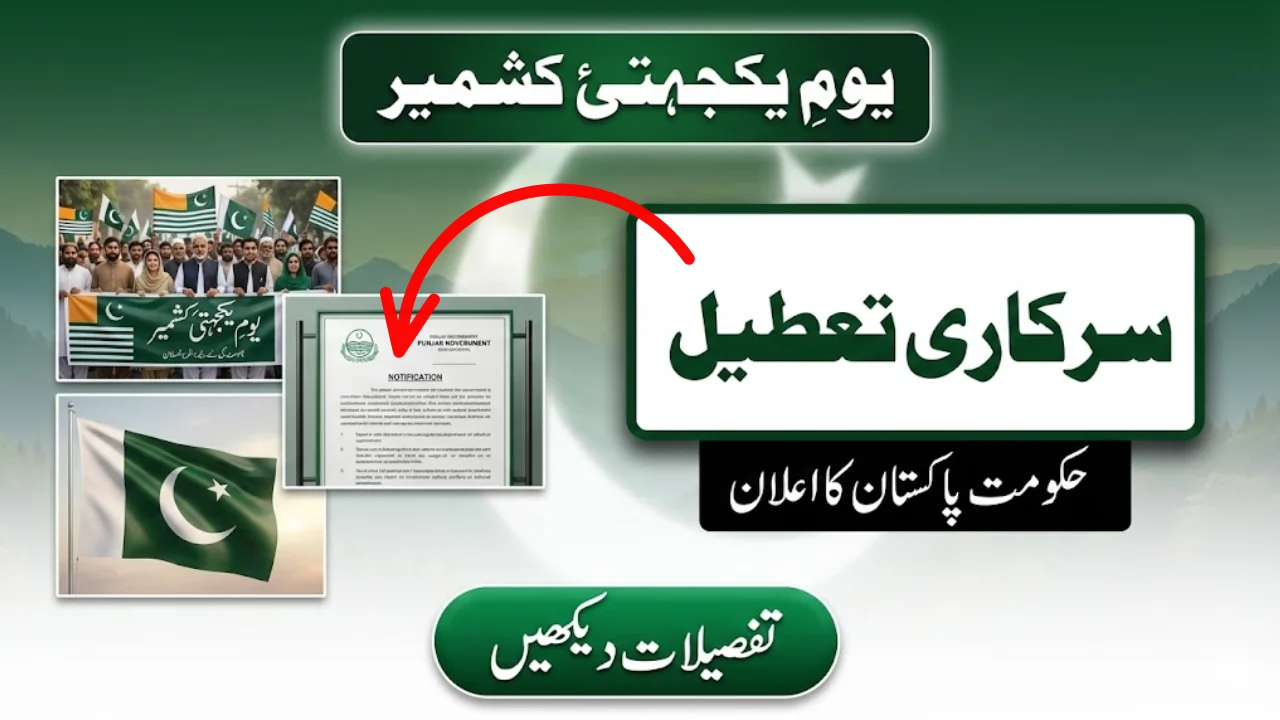
It is important to note that Kashmir Solidarity Day on 5 February is a confirmed nationwide public holiday, which sometimes causes confusion when the two dates fall close together.
What People Should Do Now
To avoid confusion and last-minute problems, follow these simple steps:
Check official notifications:
Look for announcements from your provincial government, education department, or institution. Do not rely on forwarded messages or social media claims.
Confirm with your workplace or school:
If you are employed or studying, confirm directly with your HR department, administration office, or official WhatsApp group.
Plan religious activities accordingly:
Shab-e-Barat is mainly observed at night. Even if there is no holiday, people can still perform religious practices during the evening and night hours.
Avoid assumptions:
Do not assume a holiday just because another province or institution has announced one. Policies are not uniform across Pakistan.
Common Confusion (Clarity Section)
“Shab-e-Barat is always a public holiday.”
This is incorrect. There is no permanent nationwide holiday status for Shab-e-Barat.
“If schools are closed, offices must also be closed.”
Not true. Educational closures do not automatically apply to government or private offices.
“Social media posters mean the holiday is confirmed.”
Unofficial posters and viral messages have no legal value. Only government notifications matter.
“It was a holiday last year, so it must be this year too.”
Each year’s holiday schedule is separate. Past practice does not guarantee current status.

“Islamic importance means automatic national holiday.”
While Shab-e-Barat has religious significance, public holidays are decided through official policy, not religious importance alone.
Conclusion
Shab-e-Barat holds deep religious value for many Pakistanis, but it is not a federally declared nationwide public holiday. Any closure announcements come from provincial authorities or individual institutions, not the federal government.
The safest approach is to rely only on official notifications and direct confirmations from your workplace or school. This clarity helps people plan responsibly without stress or misinformation.
Staying informed through verified sources ensures respect for both religious observance and daily responsibilities.