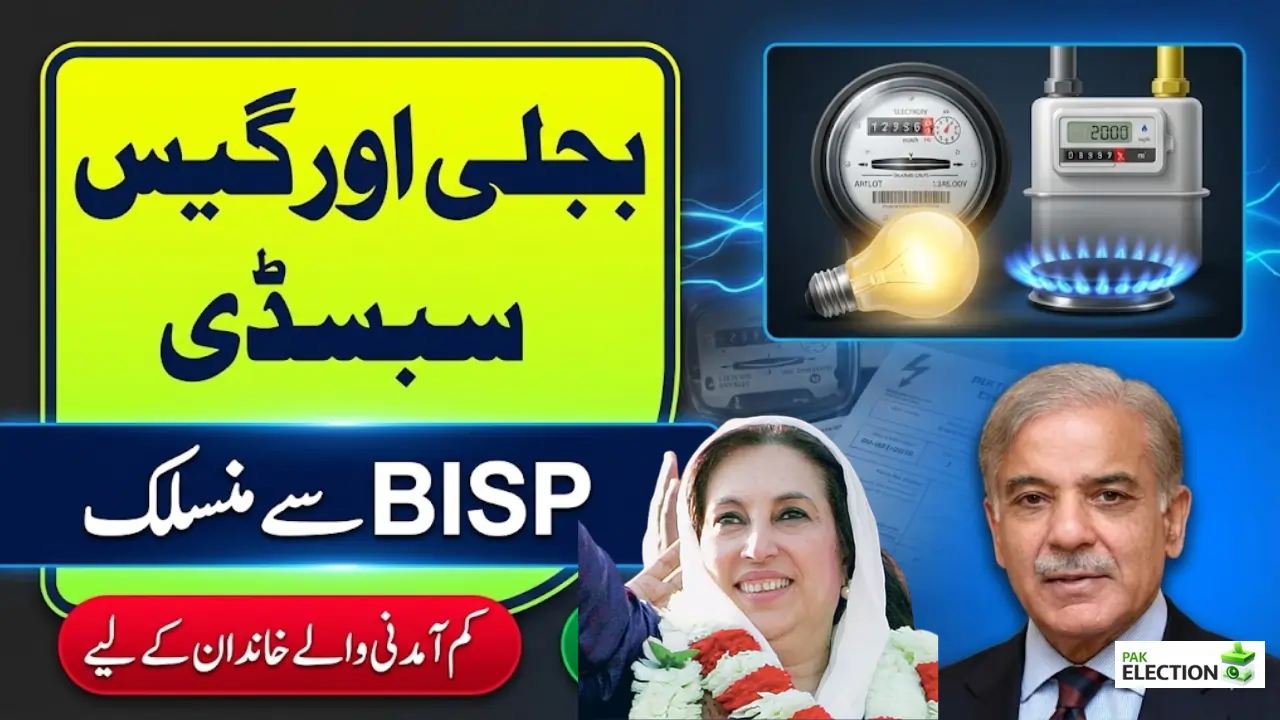
Pakistan is moving toward a major reform in its subsidy system as the government prepares to link future electricity and gas subsidies with the Benazir Income Support Programme (BISP). The goal is to ensure that financial support reaches only deserving households, while reducing inefficiencies, fiscal pressure, and long-standing circular debt in the energy sector.
According to recent analysis by the World Bank, this reform marks an important shift in how Pakistan manages social protection spending. Instead of broad and poorly targeted subsidies, the country is transitioning toward data-driven and needs-based support, aligned with its flagship poverty alleviation program.
Why Pakistan Is Reforming Electricity and Gas Subsidies
Energy subsidies in Pakistan have historically benefited a wide population, including households that do not require financial support. This approach has increased government spending, weakened fiscal discipline, and contributed to mounting circular debt in the power sector.
The World Bank highlights that distortionary fossil fuel subsidies consume a significant share of GDP across South Asia, including Pakistan. Redirecting these funds toward targeted social protection programs can strengthen economic resilience and protect vulnerable populations more effectively.
By linking subsidies with Benazir Income Support Programme, the government aims to improve accuracy in beneficiary selection and ensure public funds are used where they are most needed.

How BISP Improves Targeting and Transparency
BISP is Pakistan’s largest social assistance initiative, designed to reduce poverty and improve long-term human development outcomes. The program uses proxy means testing to identify low-income households and combines cash assistance with incentives linked to health and education.
Over the years, BISP has invested heavily in digital systems, allowing faster registration, improved transparency, and more responsive delivery of assistance. These systems make it possible to align utility subsidies with verified household data instead of blanket relief.
The World Bank notes that this approach will change the composition of social protection spending as a percentage of GDP, making it more efficient and fiscally sustainable.
Emergency Cash Support and Social Registry Strength
Pakistan stands out in South Asia due to its well-established social registry and self-registration mechanisms. During the COVID-19 pandemic, BISP launched an emergency cash program that used a fully automated and data-driven system to provide one-time financial assistance.

This initiative reached around 12 million vulnerable or newly poor families, setting a regional benchmark for rapid and scalable social protection. Such systems now provide a strong foundation for linking subsidies to real household needs.
Subsidy Reform and Circular Debt Reduction
A key objective of the subsidy overhaul is to address inefficiencies that fuel circular debt in Pakistan’s power sector. Poor targeting has long forced the government to absorb losses through repeated bailouts.
By aligning subsidies with BISP data, policymakers expect to limit financial leakage, reduce waste, and create a more predictable subsidy framework. This reform is also aligned with commitments discussed with international partners, including the International Monetary Fund.
Climate Risks and Support for Small Businesses
The World Bank also highlights Pakistan’s efforts to improve resilience against climate shocks. A Climate Risk Facility is being established to provide contingent credit and liquidity support to the microfinance sector.
This facility will help micro and small businesses recover from flood disasters, while also encouraging climate-adaptive practices through partnerships with agricultural technology firms. Such initiatives complement subsidy reforms by strengthening economic stability at the grassroots level.
Water Stress, Agriculture, and the Need for Reform
Pakistan is among the most water-stressed countries in the world, with agriculture consuming more than 90 percent of available freshwater. In regions like Punjab, inefficient irrigation, excessive groundwater extraction, and outdated farming methods have reduced water availability and farm productivity.
The World Bank emphasizes that ineffective water pricing discourages conservation. In Pakistan, existing pricing systems often favor large landowners over small farmers, creating inequity and inefficiency.
Punjab Irrigation Project Shows Measurable Results
To tackle these challenges, the World Bank supported the Punjab Irrigated Agriculture Productivity Improvement Project. The program focused on modern irrigation technologies, improved water channels, rainwater harvesting, and land-levelling services.
Under a 40:60 cost-sharing model between farmers and the government, the project achieved strong outcomes:
-
Water savings of up to 57 percent
-
Cereal yield increases of 14 to 31 percent
-
Overall water efficiency gains ranging from 9 to 45 percent

These results demonstrate how targeted investment and smarter resource management can improve resilience and productivity.
What This Reform Means for Pakistan’s Future
Linking electricity and gas subsidies with BISP represents a structural shift in Pakistan’s social protection and fiscal policy. The reform promises better targeting, reduced financial waste, and stronger protection for low-income households.
At the same time, complementary efforts in climate resilience, agriculture, and water management show a broader strategy aimed at long-term economic stability. If implemented effectively, these reforms could help Pakistan move from crisis-driven relief toward a more sustainable and inclusive support system for its most vulnerable citizens.