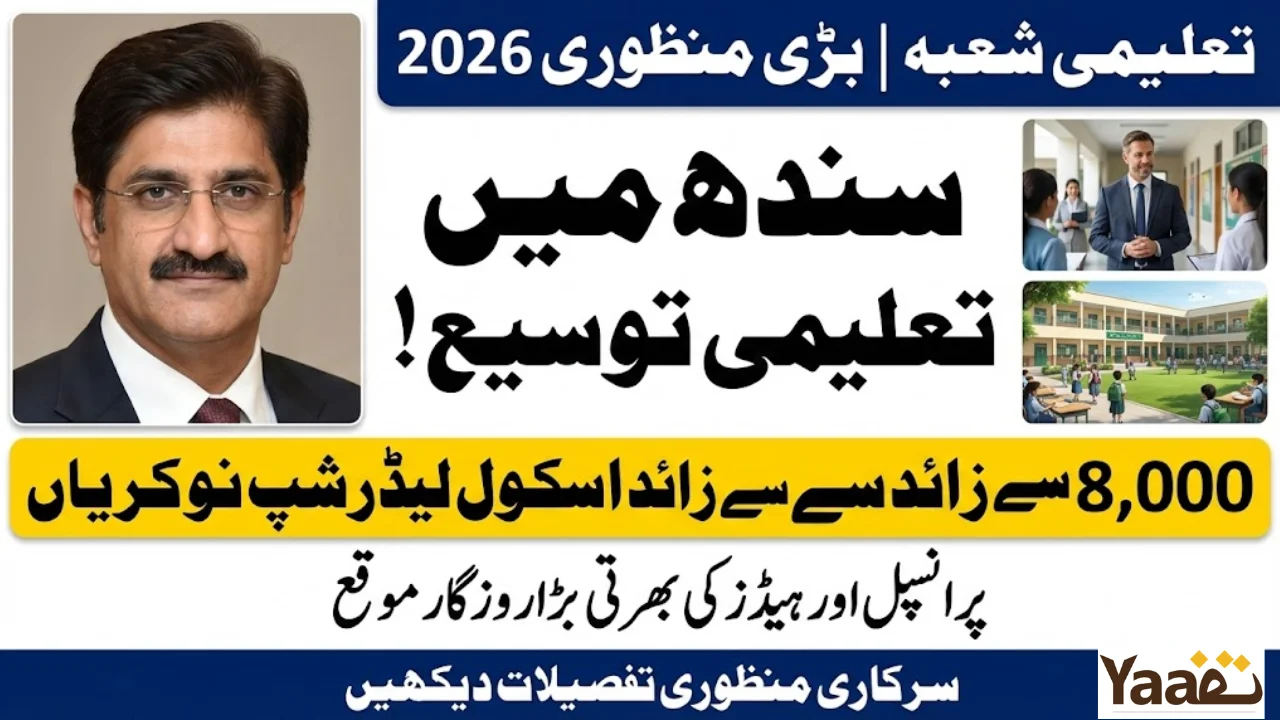
The Sindh School Education and Literacy Department has taken a major step to strengthen public education by approving 8,049 new school jobs for the 2026 academic year. This decision focuses on improving school leadership, administration, and academic oversight, especially in government schools that require stronger management structures.
The move is being seen as one of the largest education-sector hiring approvals in Sindh in recent years, aimed at raising teaching standards and accountability across the province.
What Kind of Jobs Have Been Approved?
Unlike temporary or contractual hiring, these are regular government posts concentrated on school leadership roles. The approved positions include:
-
Chief Head Master / Head Mistress (BS-20): 44 posts
-
Senior Head Master / Head Mistress (BS-19): 593 posts
-
Head Master / Head Mistress (BS-18): 1,444 posts
-
Head Master / Head Mistress (BS-17): 5,968 posts
These appointments will directly impact thousands of schools, particularly at secondary and higher secondary levels.
How Much Money Will Selected Candidates Earn?
One of the biggest attractions of these posts is stable government salary and long-term financial security.
Estimated Monthly Salaries (Approximate)
-
BS-17: Rs. 60,000 – 80,000
-
BS-18: Rs. 85,000 – 110,000
-
BS-19: Rs. 130,000 – 160,000
-
BS-20: Rs. 180,000 – 220,000
In addition to basic pay, employees are eligible for:
-
Annual increments
-
House rent allowance
-
Medical benefits
-
Pension and gratuity after retirement
Over time, a selected candidate can earn millions of rupees across their career through these posts.
Who Benefits Most From These New School Jobs?
Direct Beneficiaries
-
Experienced teachers seeking promotion
-
Education professionals aiming for leadership roles
-
Government employees eligible for grade elevation
Indirect Beneficiaries
-
Students, due to improved school management
-
Parents, through better academic discipline
-
The education system, via stronger oversight
Better leadership often leads to improved results, attendance, and teaching quality.
Why Sindh Approved These Posts Now
The Sindh government has linked this approval to:
-
Administrative reforms in education
-
Need for stronger headship in schools
-
Preparation for the 2026 academic session
-
Reducing management gaps in public schools
Strong leadership is seen as a foundation for education reform, not just infrastructure spending.
What This Means for Job Seekers in Sindh
For education professionals, this decision:
-
Opens thousands of promotion and appointment opportunities
-
Ensures job security under government service
-
Creates a clear leadership ladder within the school system
Recruitment and placement procedures are expected to follow official government rules and merit policies.
Long-Term Impact on Education Quality
With dedicated headmasters and headmistresses:
-
School discipline improves
-
Teacher performance monitoring strengthens
-
Academic planning becomes more structured

-
Student outcomes are likely to improve
This reform focuses on systemic improvement rather than short-term fixes.
FAQs
1. How many new school jobs have been approved in Sindh?
A total of 8,049 new posts have been approved for 2026.
2. Are these permanent government jobs?
Yes, these are regular government positions, not temporary contracts.
3. How much salary can selected candidates expect?
Depending on grade, salaries range from around Rs. 60,000 to over Rs. 200,000 per month.
4. Who can apply for these posts?
Primarily eligible teachers and education professionals, as per government service rules.
5. Will these jobs improve education quality?
Yes, the focus on leadership is expected to strengthen school management and academic performance.
Final Outlook
The approval of over 8,000 school leadership jobs in Sindh signals a serious commitment to education reform. By investing in people not just buildings the province aims to create a stronger, better-managed public school system.
For qualified education professionals, this is a rare and valuable opportunity offering financial stability, career growth, and a chance to shape the future of education in Sindh.